Every yard has a few spots that take more abuse than the rest.
One of the most common is the area where a hard surface meets the lawn.
- The first few feet off the patio.
- The bottom of the deck steps.
- The landing outside the back door.
- The grass in front of the shed.
- The path where people move from a walkway into the yard.
These are the transition zones. They are the places where people step, turn, drag coolers, push mowers, move chairs, and cut through the lawn again and again.
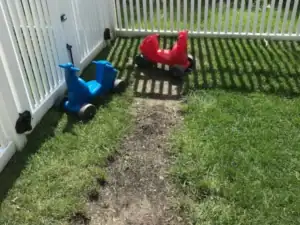
At first, the grass just looks thin. Then the soil starts showing. Then the area turns into a dusty bare patch in dry weather or a muddy mess after rain.
If you have tried reseeding this spot and it keeps wearing out, the problem probably is not the seed.
The problem is the pinch point.
Grass can handle normal backyard use when traffic is spread out. What it struggles with is repeated pressure in the same few square feet.
The good news is that you probably do not need to redo the whole yard. You need to fix and protect the transition zone.
Why Grass Fails Where Hardscape Meets Lawn
The spot where your patio, deck, or steps meet the lawn has a tough job.
On the hard surface, traffic is not a problem. Concrete, pavers, decking, and walkways can handle repeated steps in the same place.
But the second people step onto the lawn, all that pressure lands on grass, roots, and soil.
Over time, that concentrated wear can:
- Wear down grass blades
- Damage the crown of the grass plant
- Compact the soil
- Reduce water and air movement
- Make it harder for roots to grow
- Prevent new seed from establishing
That is why the grass right off the patio often looks worse than the rest of the yard.
It is not because that area is impossible to grow grass in. It is because it is being used like an entryway.
Common Transition Zones That Wear Out
These problem spots usually show up in predictable places.
Patio to lawn: People step off the patio in the same place, chairs slide into the grass, and foot traffic gathers near the edge.
Deck steps to lawn: Everyone lands in almost the exact same spot at the bottom of the stairs, adding extra force to one small area.
Back door to yard: If there is no landing or walkway, the lawn becomes the landing pad.
These are not whole-lawn problems. They are concentrated wear problems.
That is important because the fix may be smaller and more targeted than you think.
Why Reseeding Usually Does Not Last
Reseeding can work when the original problem is gone.
If a one-time project damaged the lawn, seed may be enough. Loosen the soil, add seed, water it, keep people off it, and the area can recover.
But patio edges and deck-step landings are different because the traffic does not stop.
New grass is fragile. It needs time to root, thicken, and build strength. If people step on the area too soon, the repair can fail before the grass ever gets established.
That creates the cycle many homeowners know too well:
- Seed the spot.
- Water the spot.
- See a little green.
- Hope “this is the time I fixed it”
- Use the yard like normal.
- Watch the bare patch come back.
At that point, the issue is not just repair.
It is protection.
What to Check Before You Fix It
Before choosing a solution, take a quick look at the area.
Check the soil.
If the ground feels hard, smooth, or packed down, roots will struggle. Compacted soil usually needs to be loosened before you repair the area.
Check drainage.
If water pools after rain, fix that first. If water runs off the hard surface and skips over the soil, the area may dry out faster than the rest of the lawn.
Check sunlight.
Shade from the house, deck, fence, or trees can make grass harder to grow. Shade plus heavy traffic is a tough combination.
Check the traffic pattern.
If everyone naturally steps in the same place, the wear will keep coming back unless you redirect the traffic or protect the surface.
For many homeowners, redirecting traffic is not realistic. People will step off the patio where it is easiest. Kids will run from the deck to the yard.
That is where reinforcement can make sense.
Common Ways to Fix Grass Near a Patio or Deck
There are a few practical ways to handle this problem.
Reseed and Keep People Off the Area
This is the simplest repair.
Loosen the soil, add the right seed for your region, water consistently, and keep traffic off the area while it establishes.
This can work for light wear or temporary damage. But if the area is used every day, reseeding alone may not last.
Add Stepping Stones
Stepping stones give people a defined place to step, which can reduce pressure on the surrounding grass.
This can work well if you are comfortable adding a visible path or landing area. The downside is that the space no longer stays fully grass-covered.
Extend the Hardscape
A small paver landing, concrete pad, or walkway extension can solve the wear problem by removing grass from the highest-use spot.
That may be the right choice for a main walkway or heavy-use entrance. But it also changes the yard and replaces living lawn with a hard surface. It may also just move the problem a few feet farther out, creating a new transition zone where the hardscape ends and the lawn begins.
Reinforce the Grass
If you want the area to stay real grass, reinforcement is the middle-ground option.
Instead of replacing the transition zone with stone, concrete, mulch, or traditional artificial turf, you protect the living surface where it gets the most abuse.
That is where DuraGrass fits.
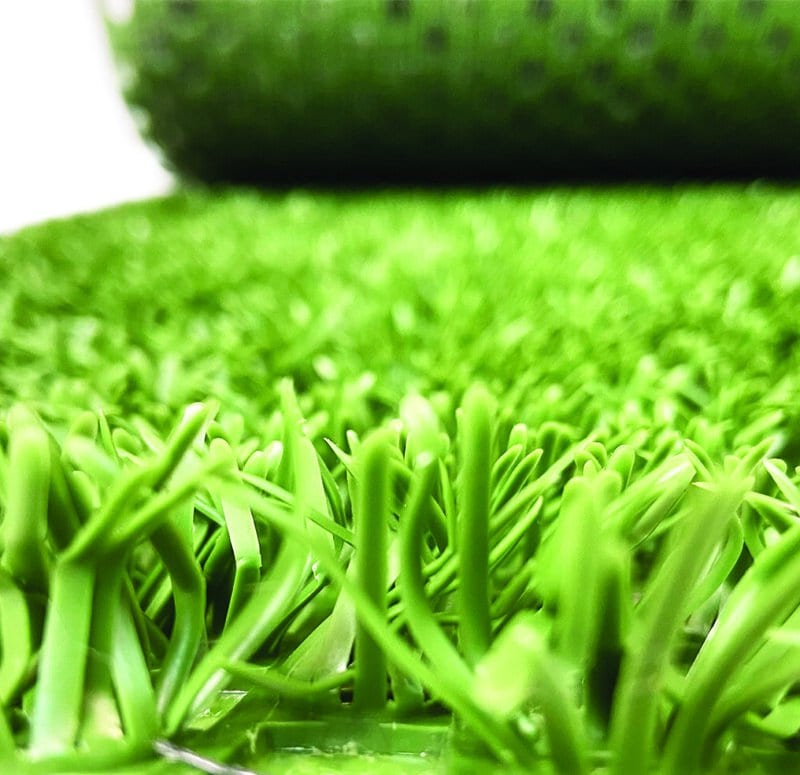
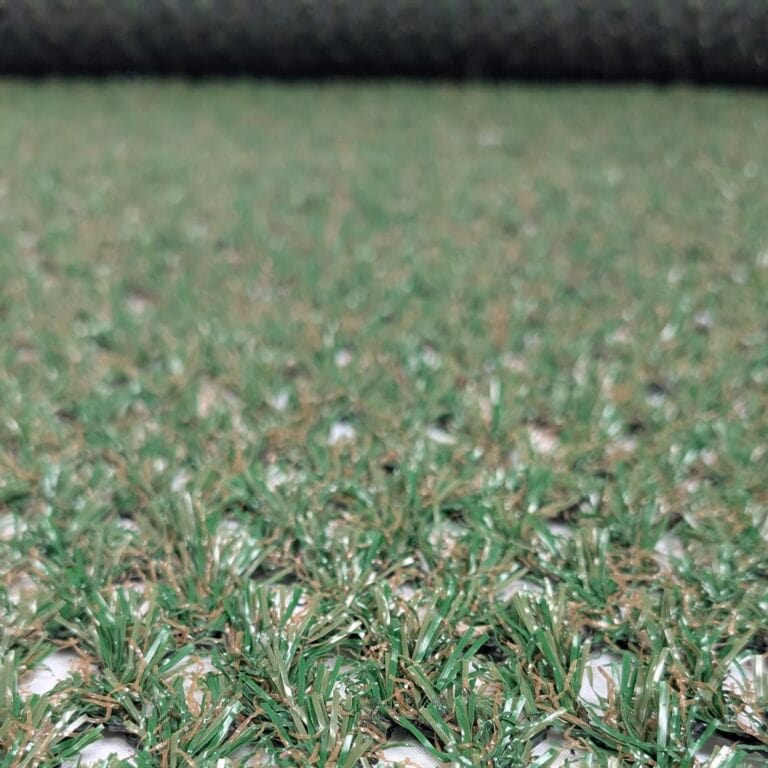
DuraGrass is a protective, perforated, grass-like reinforcement layer that lays over the soil. Real grass grows through it, while the DuraGrass layer helps protect the crown, roots, and soil surface from direct wear.
For patio edges, deck-step landings and other transition zones, that protection matters because all the traffic is concentrated in one spot.
Why DuraGrass Makes Sense for Transition Zones
DuraGrass is not meant to replace your whole lawn.
That is one of its biggest advantages.
Most homeowners do not have a whole-yard problem. They have a few high-wear zones that make the rest of the yard look worse.
The first few feet off the patio may be bare, while the rest of the backyard looks fine. The bottom of the deck steps may be muddy, while the rest of the lawn is healthy.
DuraGrass lets you focus on the problem area.
You can reinforce only the spot that keeps breaking down, then allow grass to grow through it so the area still looks and functions like lawn.
This is especially useful in suburban yards where appearance matters. A bare dirt patch near the patio is hard to ignore. It is where people gather, where guests see the yard, and where the lawn should feel finished.
DuraGrass helps protect that visible transition zone without forcing you to turn it into a walkway.
Protection Matters During Stress and Dormancy
Transition zones often look worst during stressful parts of the year.
In summer, heat and drought can slow grass growth or push some lawns into dormancy. When grass is stressed, it has less ability to repair itself. That means every step off the patio can do more lasting damage.
The same idea applies during winter or dormant-season wear. The grass may not be actively growing, but the crown and soil surface still matter. If that base gets worn down, the lawn has a harder time bouncing back when growing conditions return.
DuraGrass does not keep dormant grass green. It does not make grass grow when the season, climate, or moisture level will not support growth.
What it does is help protect the living surface through the seasons.
- During active growth, it helps protect grass as it fills in.
- During summer stress, it helps reduce direct wear when recovery slows.
- During fall recovery, it helps protect new growth and thickening.
- During dormant seasons, it helps shield the crown and soil surface from repeated abuse.
That is why these transition zones need more than a spring repair. They need protection where the wear keeps happening.
A Simple Way to Fix the Area
For most patio, deck and transition zones, the fix is straightforward.
First, identify the actual wear zone. It may only be 10 to 50 square feet.
Next, loosen and prepare the soil so roots have a better chance to grow.
Then choose the right grass seed, sod, or mix for your region and sunlight conditions.
Finally, reinforce the high-wear area with DuraGrass so the grass can grow through a protected surface.
The goal is not to cover the whole yard. The goal is to protect the pinch point where people keep stepping, turning, landing, or pushing equipment through the same space.
Even with reinforcement, living grass still needs time to establish. Water as needed, follow normal seed or sod guidance while the area fills in.
DuraGrass adds protection, but grass still needs reasonable growing conditions.
When DuraGrass May Not Be the Right Fix
DuraGrass is useful for many patio and deck transition zones, but it is not magic.
If the area has standing water after every rain, drainage needs to be addressed first.
If the spot gets almost no sunlight, grass may struggle even with reinforcement.
If the area is used like a main sidewalk with constant heavy traffic, a hard surface may be the better long-term choice.
And if your goal is a perfectly green surface year-round with no seasonal variation, traditional artificial turf may be closer to what you are expecting.
DuraGrass is for homeowners who want to keep real grass and give it a better chance in the spots where regular lawn keeps failing. Some homeowners also like that DuraGrass can still provide a cleaner, reinforced surface in a worn area while grass is filling in, or in spots where grass growth is limited. The best result is still a living lawn growing through it, but the reinforced layer can be a meaningful improvement over bare dirt or mud.
Before you reseed that same spot again and hope it works this time, measure the worn transition zone. DuraGrass lets you reinforce the area that takes the beating, without turning the rest of your lawn into a project.
Final Takeaway
The area where your patio, deck, or steps meets the lawn is one of the hardest places to keep grass healthy.
Not because grass cannot grow there.
Because the same few square feet get stepped on, turned on, dragged across, and worn down again and again.
You can reseed it. You can add stepping stones. You can turn it into a hard walkway. In some yards, those are the right choices.
But if you want that transition zone to stay green, natural, and lawn-like, the better answer may be to reinforce the grass instead of replacing it.
DuraGrass helps protect the base of the living lawn so the grass has a better chance to grow back, hold up, and recover through the seasons.
It is not a whole-yard renovation.
It is protection for the pinch point where your yard takes the beating. It’s finding another strategy beyond “I hope it works!”