Every yard has a few natural paths.
From the back door to the garage.
From the patio to the gate.
From the driveway to the shed.
From the deck to the playset.
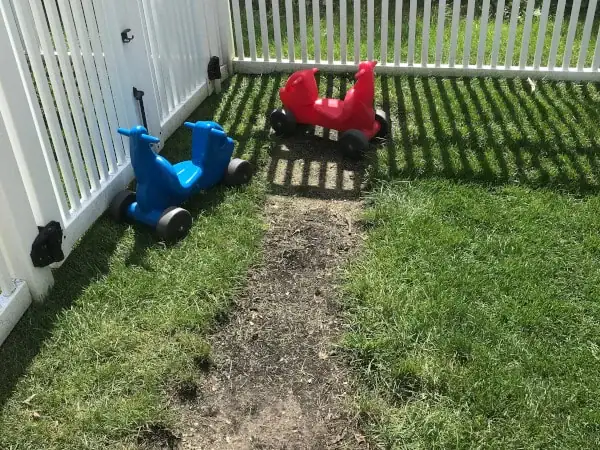
At first, these paths may just look a little thin. Then the grass gets shorter. Then the soil starts showing. Eventually, the area becomes a bare strip that looks more like a dirt trail than part of the lawn.
If you have tried reseeding that walkway and the grass keeps dying again, the problem probably is not your seed. It is the traffic.
Grass can handle occasional use. What it struggles with is repeated pressure in the same narrow area, day after day. That is why walkways are one of the most common places grass fails in a yard.
The good news is that you have options. The right fix depends on whether you want to keep that area as real grass or turn it into something else.
Why Grass Dies in Walkways
Grass dies in walkways because it is being asked to perform like a path.
That may sound obvious, but it is the part many homeowners miss. A walkway gets repeated foot traffic in a concentrated line. Every step presses down on the grass blades, crowns, roots, and soil underneath.
Over time, a few things happen.
First, the grass blades get worn down. They do not have enough time to recover between uses.
Second, the soil becomes compacted. Compacted soil makes it harder for water, air, and roots to move through the ground.
Third, new grass has a harder time establishing. Even if seed germinates, young grass is fragile. If people keep walking across it before the roots develop, the seedlings get crushed or pulled loose.
That is why the same path keeps coming back.
You are not just dealing with a bare spot. You are dealing with a traffic pattern.
If your walkway is part of a larger high-traffic area, start with our guide on how to fix high-traffic lawn areas that won’t grow back.
Why Reseeding Usually Does Not Solve It
Reseeding can help if the walkway damage was temporary.
For example, if a contractor walked through one area for a week, or a section of the lawn was damaged during a project, seed may be enough once the traffic stops.
But if the path is part of how your family actually uses the yard, reseeding alone usually becomes a cycle.
You seed it.
You water it.
It starts to green up.
People walk on it again.
The grass thins out.
The dirt path returns.
The problem is not that reseeding never works. The problem is that reseeding does not change what caused the grass to die in the first place.
If the area is still being used as a walkway, new grass is being put back into the same conditions that damaged the old grass.
The Real Question: Do You Want a Lawn or a Path?
Before fixing a worn grass walkway, ask one practical question:
Do you want this area to stay lawn, or should it become a dedicated path?
There is no perfect answer. A dedicated path can be a smart choice in some yards. But not every homeowner wants pavers, gravel, mulch, or concrete cutting through the grass.
Sometimes the worn path is in a spot where you still want the yard to feel open and natural. Maybe it is a backyard route that does not need to look formal. Maybe you want kids to run across it. Maybe you want to mow over it like the rest of the lawn.
That is where the choice becomes more specific.
If you are ready to stop treating the area as lawn, hardscape or mulch may make sense.
If you want to keep real grass there, the fix needs to help the grass survive the traffic better.
Common Ways to Fix a Worn Grass Walkway
There are several ways to deal with a worn path in the lawn. Each one has tradeoffs.
Option 1: Reseed and Restrict Traffic
This is the simplest first step.
Loosen the compacted soil, add a thin layer of quality topsoil or compost, spread seed, cover it lightly, and water consistently. Then keep people off the area while the grass establishes.
This can work if traffic is light or temporary.
The downside is that it requires behavior change. If people naturally keep using the same route, the grass may fail again.
Best for:
- Light wear
- Temporary damage
- Areas where you can easily redirect traffic
- Homeowners willing to rope off the area while grass grows
Not ideal for:
- Daily or weekly walkways
- Narrow side-yard paths
- Routes from doors to gates, garages, or sheds
- Areas where kids regularly run or play
Option 2: Add Stepping Stones
Stepping stones can be a good middle-ground fix.
They give people a specific place to step, which reduces pressure on the surrounding grass. They can also look natural if installed well.
The downside is that the area becomes more of a designed path. You also need to install the stones level enough that they are safe and easy to mow around.
Best for:
- Light to moderate foot traffic
- Informal garden paths
- Areas where a visible path would look intentional
Not ideal for:
- Play areas
- Mower turn zones
- Wide worn areas
- Homeowners who want the space to remain fully grass-covered
Option 3: Use Mulch or Gravel
Mulch and gravel are common fixes for yard paths because they are relatively affordable and easy to understand.
They also solve the grass problem by removing the expectation that grass should grow there.
The downside is that both change the function of the space. Mulch can scatter into the lawn, break down over time, and need refreshing. Gravel can migrate, collect leaves, and feel less comfortable underfoot.
Best for:
- Side-yard paths
- Utility routes
- Garden walkways
- Areas where grass is not important
Not ideal for:
- Open backyard areas
- Spaces where kids play barefoot
- Homeowners who want to keep the look and feel of a lawn
Option 4: Install Pavers or Concrete
For a true walkway, hardscape is the most durable option.
Pavers, concrete, and stone can handle repeated foot traffic far better than grass. If the path is heavily used every day, or if you want a permanent walkway, this may be the right solution.
The downside is cost, permanence, and appearance. Hardscape changes the yard. It may be more formal than you want, and it removes living grass from that area completely.
Best for:
- Heavy daily traffic
- Main routes to doors, garages, or gates
- Areas where you want a finished walkway
- Long-term durability
Not ideal for:
- Homeowners trying to preserve green space
- Areas where a hard path would feel too heavy
- Yards where water absorption and a softer surface matter
Option 5: Reinforce the Grass
Grass reinforcement is different from the other options because it does not replace the lawn.
Instead, it helps protect the grass and soil in high-use areas so real grass can grow through and around the reinforcement layer.
This is where DuraGrass fits.
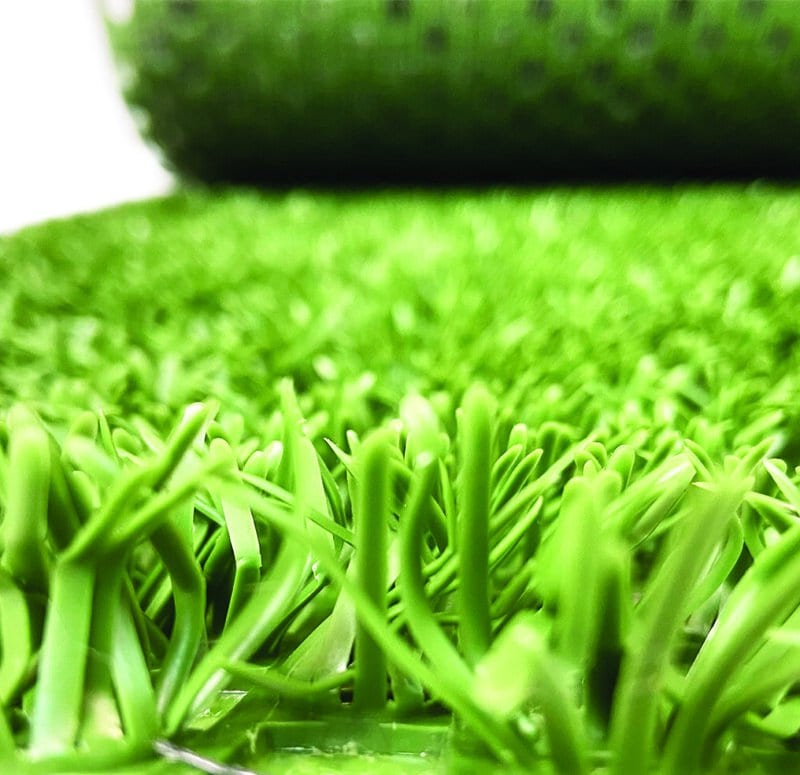
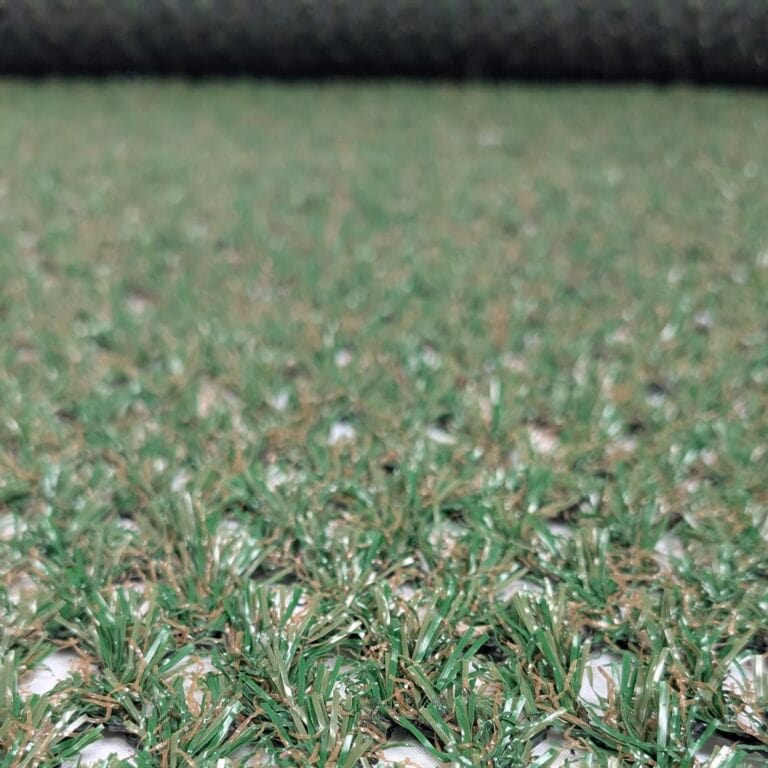
DuraGrass is a hybrid turf designed for homeowners who want to keep real grass in tough spots. It is installed over prepared soil, then grass grows through it over time. The product helps reduce direct wear on the grass crown and gives the area more support than grass alone.
It is not concrete. It is not traditional artificial turf. It will not make a lawn indestructible.
But for many worn walkways, that is exactly why it makes sense. It gives homeowners another option between “keep reseeding forever” and “turn this into a hard path.”
When DuraGrass Makes Sense for a Worn Walkway
DuraGrass is a good fit when the worn path is caused by regular foot traffic, but you still want the area to look and function like lawn.
It may make sense for:
- Backyard paths to gates or sheds
- Footpaths between patios and play areas
- Side-yard routes that get regular use
- Informal shortcuts across the lawn
- Areas where grass grows briefly, then wears down again
- Homeowners who want to mow over the area once grass is established
The best DuraGrass candidates are areas where grass wants to grow, but keeps getting worn out.
That distinction matters.
If the area gets some sun, drains reasonably well, and can support grass growth, reinforcement can help protect the lawn from repeat damage.
If the area is deep shade, constantly wet, badly compacted, or heavily used every day like a sidewalk, you may need to solve those issues first or choose a different surface.
When DuraGrass Is Not the Right Fix
DuraGrass is not the right answer for every walkway.
If the path is the main entrance to your home and gets constant traffic, pavers or concrete may be more appropriate.
If water sits in the area after every rain, drainage should be addressed before installing any lawn solution.
If the soil is rock hard, it should be loosened and prepared first.
If the area gets almost no sunlight, grass may struggle with or without reinforcement.
And if your real goal is a perfectly green surface with no seasonal variation, artificial turf may be closer to what you want.
DuraGrass is for homeowners who still want real grass and understand that real grass needs reasonable growing conditions. The product helps protect the area, but it does not override everything nature needs to grow.
How to Think About the Right Fix
Here is the simplest way to decide what to do with a worn grass walkway:
If you do not need the area to stay grass, build a path.
If you want the most durable surface, choose pavers, stone, gravel, or concrete.
If you want the area to stay real grass, stop thinking only about repair and start thinking about reinforcement.
That is the shift.
Most homeowners keep trying to repair worn walkways. They add more seed, more water, and more patience. But if the area is still being used as a walkway, the grass needs protection, not just another round of seed.
DuraGrass is designed for that middle ground.
It helps homeowners patch, boost, and protect the tough spots where grass alone keeps losing the fight.
What Actually Fixes Grass Walkways?
The honest answer is that the fix depends on how the space is used.
A lightly worn walkway may only need soil repair and reseeding.
A heavily used walkway may need hardscape.
But for the in-between areas, the paths that still belong in the lawn but keep wearing down, reinforcement can be the practical answer.
Grass dies in walkways because the same area gets stepped on again and again. To fix it, you either need to reduce the traffic, redirect the traffic, replace the grass, or reinforce the grass so it has a better chance to survive.
For homeowners who want to keep the yard green, natural, and mowable, DuraGrass gives those worn paths a fighting chance.