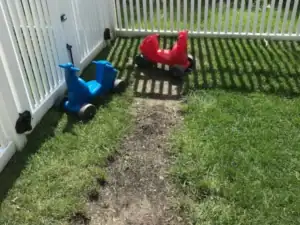
If you have a path in your yard that’s turned into dirt, you’re not alone.
It usually starts small. A shortcut from the patio. A route kids take every day. A strip where the mower turns. Over time, that traffic adds up and suddenly grass just… stops coming back.
Watering doesn’t help. Seeding doesn’t stick. And every attempt to fix it feels temporary.
This article breaks down why high-traffic areas fail, what actually works, and how to choose the right solution for your yard.
Why Grass Fails in High-Traffic Areas
Grass struggles under repeated pressure for a few simple reasons:
- Soil compacts, limiting root growth
- Grass blades get worn down faster than they can recover
- Seed can’t establish in disturbed soil
- Water runs off instead of soaking in
Once the soil is compacted and the grass is gone, you’re no longer maintaining a lawn, you’re trying to rebuild one under stress.
Step 1: Decide If You’re Repairing or Reinforcing
Before jumping into solutions, it’s important to understand your goal.
- Repairing means trying to regrow grass as-is
- Reinforcing means helping grass survive ongoing traffic
If the area gets daily use, repair alone usually fails. That’s where reinforcement solutions come in.
Step 2: Compare Your Options
Here are the most common ways homeowners deal with high-traffic areas:
1. Reseeding and Soil Repair
Best for: low to moderate traffic
- Loosen soil
- Add topsoil or compost
- Seed and water
Limitations:
Works temporarily, but traffic often damages new growth again.
2. Stepping Stones or Pavers
Best for: defined walkways
- Durable
- Clean look
Limitations:
Removes grass entirely. Can feel rigid or out of place in natural yards.
3. Gravel or Mulch
Best for: budget fixes
- Easy to install
- Improves drainage
Limitations:
Moves around, doesn’t integrate with lawn, requires upkeep.
4. Artificial Turf
Best for: fully replacing grass
- Consistent appearance
- Handles traffic well
Limitations:
Higher cost, no natural grass, can heat up in sun.
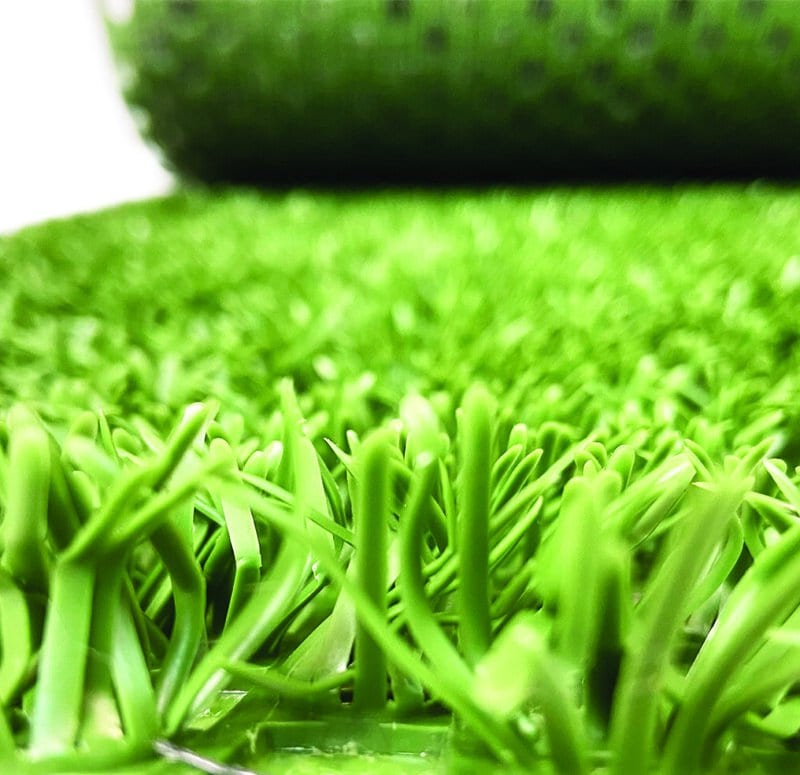
5. Hybrid Turf (Grass Reinforcement)
Best for: keeping grass while protecting it
- Installs over existing soil
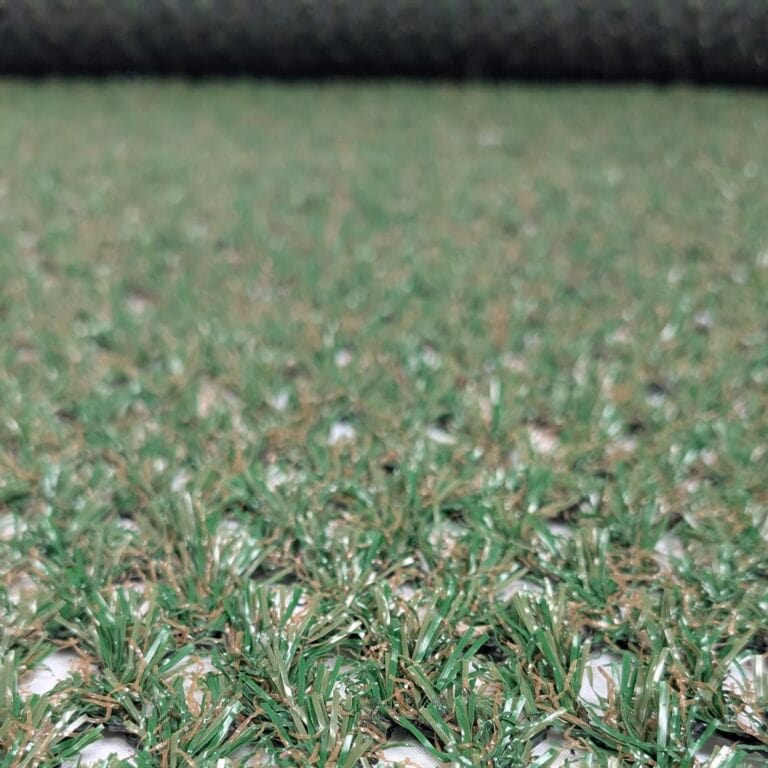
- Allows grass to grow through
- Helps distribute foot pressure
Limitations:
Not as durable as hard surfaces like concrete or full artificial turf—but significantly more protective than grass alone.
This is where products like DuraGrass fit in.
Step 3: Where DuraGrass Makes Sense
DuraGrass isn’t trying to replace your lawn. It’s designed to help it survive where it normally wouldn’t.
It works best in areas like:
- Backyard paths
- Around patios or decks
- Play areas
- Lawn sections where mowers turn
Instead of asking grass to handle traffic on its own, it gives it a layer of support.
Grass grows through the structure, and once established, the area looks and functions like lawn but holds up better to repeated use.
(See: DuraGrass Installation Guide and Measurement Tool)
Step 4: Set Expectations (This Matters)
No solution is perfect, and it’s important to be clear about that.
- DuraGrass will not perform like concrete
- It will not eliminate wear entirely
- It will not fix poor drainage on its own
What it does do is extend the life of your grass in problem areas and reduce how often you have to repair them.
For many homeowners, that’s the difference between a yard that constantly needs attention and one that holds up over time.
(See: What to Expect)
Step 5: Basic Installation Approach
At a high level:
- Level the area as much as possible
- Lay DuraGrass over soil
- Anchor it in place
- Allow grass to grow through
Leveling is important. Uneven ground can lead to scalping when mowing and uneven wear.
When to Choose a Different Option
DuraGrass may not be the right fit if:
- You want zero maintenance
- The area gets extremely heavy or constant traffic
- You prefer a fully finished, non-living surface
In those cases, hardscaping or artificial turf may be a better choice.
Final Takeaway
High-traffic lawn damage is predictable, and fixable, but only if the solution matches how the space is used.
If you’re trying to keep a natural yard and just need it to hold up better in key areas, reinforcement tends to outperform repeated repair.
If you’re ready to explore that route, DuraGrass is one option designed specifically for that middle ground.
(See: Product Details)